Cross stitch
Cross stitch basics
Getting started with cross stitch: fabric, floss, needles, and your first stitch.
What you need
Aida cloth (14 count is a friendly starting size), a size 24 tapestry needle, a small embroidery hoop, and six-strand cotton floss. Most patterns call for two strands at a time — just separate them from the bundle.
The cross stitch
A full cross is two diagonal stitches forming an X. Come up at the bottom left, down at the top right, up at the bottom right, and down at the top left. Do all your slashes in one direction first across a row, then cross them back the other way. Your stitches will be cleaner and your back will stay tidy.
Reading a chart
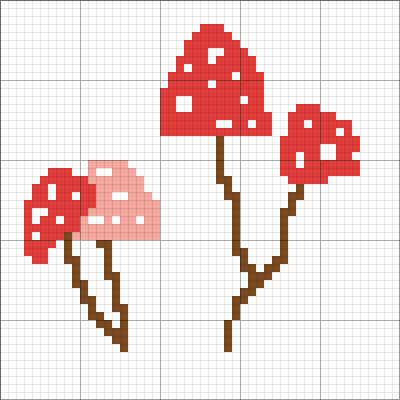
Each square on the chart equals one cross on the fabric. Colors or symbols mark the thread color. Find the center of your chart and the center of your fabric (fold it in half twice) and start there so the design stays centered.
Choosing your first kit
Look for a kit with 14-count Aida, pre-sorted floss, a needle, and a printed chart. Pick a design smaller than 5 by 7 inches with fewer than ten colors. Simple geometric or floral motifs are more forgiving than portraits or lettering. A good starter kit lets you focus on technique instead of shopping.
Setting up your hoop
Loosen the screw on the outer ring and lay the inner ring on a flat surface. Place your fabric over it and press the outer ring down so the fabric sits taut between the two rings. Tighten the screw just enough to hold the fabric firm — over-tightening can stretch the weave. Pull the edges gently until the grain lines run straight.
Parking vs cross-country
Cross-country means you stitch all of one color across the whole area before switching threads. It is fast and keeps your thread changes to a minimum. Parking means you work one small block at a time, leaving each thread parked at the edge of the block ready for the next row. Parking is slower but makes it easier to track your place on complex designs. Try both on a small piece and see which feels more natural.